


As holiday spending collides with year-end financial deadlines, Janna Scott and the team behind Money 101 are drawing attention to the decisions that don’t come with a sale sign.
By Thanksgiving, Americans will have been offered countless opportunities to save money by spending it.
Retailers are advertising discounts on everything from televisions to winter coats. At checkout, installment financing can make a $400 purchase appear more manageable when divided into four payments of $100.
The price hasn’t changed. Only its presentation has.
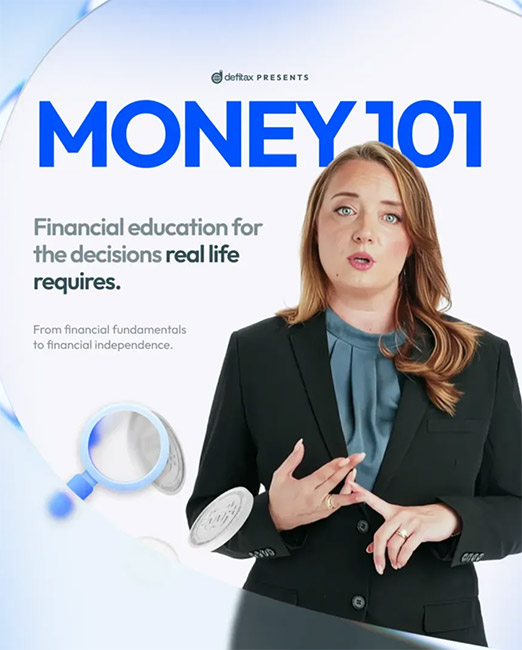
It’s a familiar piece of financial psychology, and one that illustrates the work Janna Scott is doing through Money 101.
Scott, co-founder and CEO of DeFi Tax, helped develop the financial education program with Mark Crawford. She provides technical instruction for a course examining how everyday financial arrangements work, including borrowing, taxation, and retirement planning.
November gives those subjects particular urgency. While consumers prepare for Black Friday, employees are approaching the final pay periods of 2026. Retirement contributions, charitable donations, and holiday borrowing are competing for attention, often within the same household budget.
Consider the workplace retirement account.
For 2026, employees can contribute up to $24,500 to most 401(k) plans, excluding additional catch-up contributions available to eligible older workers. Someone who intended to increase contributions but never adjusted payroll deductions may have only a few opportunities remaining. Employer matching rules and payroll schedules can further complicate the calculation.
A significant change also affects certain higher earners aged 50 and older. Beginning in 2026, employees whose prior-year wages from the employer exceeded $150,000 generally must make eligible catch-up contributions on an after-tax Roth basis when their plans are subject to the requirement.
For workers accustomed to making pretax contributions, the distinction warrants a conversation with their plan administrator.
Scott’s interest in Money 101 concerns the broader problem behind these decisions: people are expected to understand financial obligations that may never have been adequately explained.

“People are expected to make important financial decisions throughout their lives, often without ever being given a clear foundation for understanding how money actually works. With Money 101, we wanted to make financial education practical and approachable, so people can better understand the decisions in front of them and feel more prepared to navigate their financial lives,” Scott said.
Charitable giving presents another November consideration.
Beginning with the 2026 tax year, taxpayers who claim the standard deduction may deduct up to $1,000 in qualifying cash donations, or $2,000 for married couples filing jointly. Those who itemize face a different change: charitable contributions generally become deductible only to the extent they exceed 0.5 percent of adjusted gross income, subject to applicable limitations.
The changes make it worth checking an organization’s eligibility and keeping proper donation records. A contribution made in good faith may not qualify for the deduction a taxpayer expects.
These details are publicly available through the IRS. Knowing where to find them and understanding their application can be considerably more difficult.
Money 101 was developed to address that familiarity gap. Its 12 self-paced episodes are intended for people without previous financial training. Scott handles technical instruction, while Aria Cissney, also a co-founder and CEO of DeFi Tax, serves as host.
Crawford, whose background includes finance and marketing, helped conceive and develop the program. Participants work through case studies, quizzes, and assignments, ultimately creating a personal financial plan.

Cissney recognizes how difficult financial subjects can appear when someone is trying to understand them without guidance.
“Financial education can feel overwhelming when you are trying to piece everything together on your own. Money 101 was designed to take people through those fundamentals in a way that feels clear, relevant, and easy to follow, from everyday money habits and credit to investing, major purchases, and long-term planning,” Cissney said.
Holiday shopping offers an immediate illustration.
Buy Now, Pay Later services allow consumers to divide purchases into installments, sometimes without interest when payments are made as agreed. One arrangement may be manageable. Several, each with different payment dates, can become difficult to track alongside ordinary household expenses.
A smaller payment at checkout doesn’t necessarily mean a purchase is affordable.
November also brings International Fraud Awareness Week, observed November 15–21, 2026. Organized by the Association of Certified Fraud Examiners, the annual campaign encourages fraud prevention and detection.
The timing coincides with a season of online purchases, delivery notifications, and charitable appeals. Fraudulent retail websites and counterfeit shipping messages can exploit the pressure to act quickly. A convincing logo or familiar company name offers little assurance that a message is genuine.
Consumers can reduce their exposure by visiting retailers directly rather than following unsolicited links and verifying charitable organizations through the IRS database.
For Scott’s educational work, these situations share a common difficulty. Consumers must recognize which details matter before completing a transaction, whether that means reviewing borrowing terms, checking a donation’s eligibility, or understanding a retirement contribution.
Money 101 also includes a donor-supported initiative intended to provide more than 10,000 subscriptions through participating colleges, without charge to the institutions or students. The program ordinarily carries a retail price of $2,250.
The initiative could introduce financial instruction before students encounter their first workplace retirement plans, independent tax returns, or substantial borrowing decisions.
The course does not offer individualized investment or tax advice. Nor can financial education eliminate the risks associated with borrowing, investing, or changing economic circumstances. Its usefulness will depend on what participants understand and apply after completing it.